

I’m sorry if this has been asked before, I searched using different terms but couldn’t find a similar question. I’m a noob. When using apt install sometimes it recommends a bunch of other packages. I read that GUI tools generally install them. I don’t use GUI, I use the terminal. I know of the --no-install-recommends flag, but I am wondering whether and when to use it. Should I just let it do the default thing?
For example, this is the list of packages when I try to install Calibre:
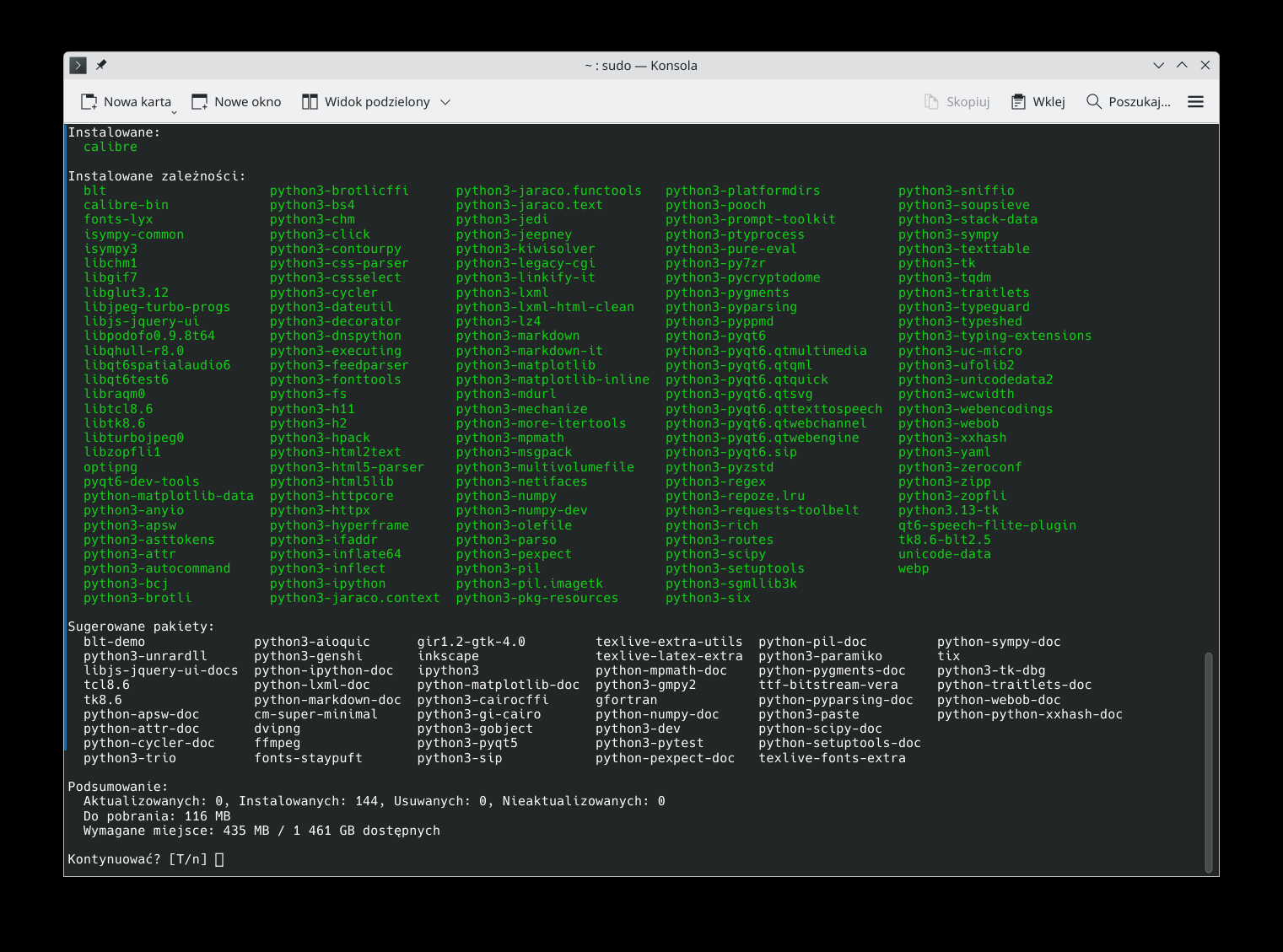
Some of them seem useful based on names, but for example blt-demo?
Yes, full system upgrade, like from 12 to 13.
Regular non-release updates shouldn’t break because the rest of the Debian packages are frozen to their versions at the time of the distro release and only security and bug fixes get shipped. So for example if VS Code needs libosmething 6.3 today and is incompatible with libsomething 7, libsomething 7 would never replace 6.3 on your system unless you do a full release upgrade. When you upgrade 6.3 could be replaced with 7 or 8 and the VS Code packe could say - wait this breaks me, then apt says - oh shit, we’re gonna break VS Code - and it stops the release upgrade. And then you’re left with a broken system mid-upgrade. Can be fixed if you know how but for newer users - that’s a nuke-and-pave. Note that you can clone your system to another SSD and try a release upgrade to see if anything breaks. You could even so that in a VM but that’s a bit more involved. I’m in the process of planning an upgrade from Ubuntu 22 through 24 to 26 and just did such a test. There was some breakage due to some orphaned packages that I have installed from god-knows-where. This system was last reinstalled in 2014. 😅
That’s where Btrfs snapshots come in handy :) I was on openSUSE Tumbleweed just before this Debian install, but openSUSE gave me trouble with some software and a couple broken distro upgrades (which, in a rolling release, happen all the time — I upgraded once a week) not of my fault (they’re in the process of some changes related to SELinux and my system was unable to upgrade due to some policies — I didn’t tweak anything, it was annoying). So I switched to Debian and it’s been smooth sailing. So far what they say has been true — it’s rock stable, boring even :) Everything just works for me. But I have the default ext4 filesystem and although I do 3-2-1 backup, having automated recoverable snapshots was nice on openSUSE.
Yeah, root filesystem snapshots, whether it be Btrfs or ZFS def solve this. My laptop is Debian 13 on ZFS. Without that, as historically has been the case, one had to be more careful abt this. With snapshots, it’s much easier. I was actually debating moving my Ubuntu system’s root to ZFS prior to upgrade for this exact reason. Decided to go as-is (ext4 on LVMRAID) and try migrating root after the upgrade.