
• 0 Posts
  • 17 Comments
Joined 3 years ago
cake
Cake day: September 2nd, 2023

help-circle

  • There is no direct adjacency needed to spread seeds from one plot of land to another, that’s one of your made up hurdles. Small seeds naturally get blown far in the wind. Larger seeds still get carried large distances by animals, which was why I specifically copy pasted the bit about birds carrying acorns …

    To claim that it would be difficult and expensive to let a wild forest grow in those meadows is absurd, that’s what this was about for me. It’s a convenient excuse to do nothing, but it’s not a very good excuse.

  • To give another example:

    Instead, the trees at Knepp Castle Estate in southern England were allowed to spread naturally. Birds such as jays can disperse as many as 7,500 acorns in four weeks. “Not a single tree was planted, no saplings were bought from commercial nurseries, no tanalised wooden stakes, no polypropylene tubes and plastic ties, no direct financial or carbon costs – no effort,” says Isabella Tree, co-owner of Knepp Castle Estate.

    Chazdon, who has studied natural regeneration for more than 30 years, questions the commonly held assumption that trees need to be actively planted to tackle climate change and biodiversity loss. “There’s a perspective that humans did this damage and it’s our job to fix it, and that we should govern the process, and just let nature help when it can,” she says. “Another view is that forest restoration is fundamentally natural, and that humans can assist it, but ultimately it should be governed by natural processes.”.

    Proponents are arguing for natural regeneration to be taken more seriously in national and international efforts to mitigate the climate and biodiversity crises. Recent research has shown that natural regeneration can potentially absorb 40 times more carbon than plantations, and provide a home for more species. It is also significantly cheaper than tree planting, with different studies in Brazil showing costs reduced by 38%, or even up to 76%.

    https://www.bbc.com/future/article/20210524-the-reason-wild-forests-beat-plantations


  • I’ve seen forest sprout up in abandoned dead areas without any human assistance. It takes about 2 decades of being left alone to get enough young growth to start being called a forest, but not really more than that. And it would take generations more to be called an old “real” forest, but it has to start somewhere. To rehabilitate long dead soil it might take what you describe, but turning an old meadow into a wild area that will eventually turn into a forest, does not need human intervention. It just requires to be left alone. In my climate that is. Claiming that forests can’t grow without human assistance is absolute nonsense, forests grew just fine before humans came along.

    And as further proof that I don’t live in fantasialand with my belief that forests can grow without human intervention, here’s 2 links with examples: https://en.wikipedia.org/wiki/Passive_rewilding https://www.rewildingmag.com/passive-rewilding-natural-reforestation/


  • Making wild forests in a temperate climate is not complicated at all. Stamp a bunch of seeds into the ground, fence it off to keep grazers away, wait a few years, and boom there’s a new forest. Once it gets started, nature knows just fine how to grow forests, they’ve been around far longer than our meddling after all. The problem is humans, who need capital and incentives to let nature do it’s thing. Making the forest is cheap, buying the land is expensive. And a wild forest has little earning potential, so for private landholders it makes no financial sense.

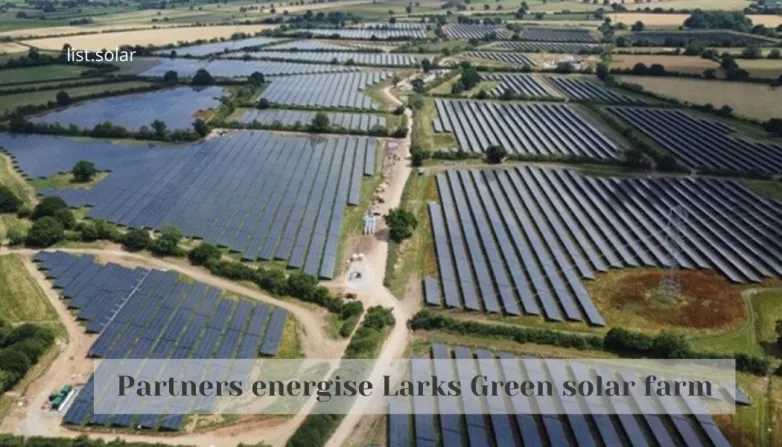
    But if there were incentives, then these solar panels could have been put above existing hardened surfaces (roads, parkings), and the unhardened land could have been returned to nature. We’d have both the solar panel fields and the forest. It requires a much larger up front investment, which is why it’s not going to happen without government incentives, and to get those, political will is needed, which is why it’s not going to happen anytime soon.

    And we should absolutely be making more forests from scratch, Europe has a massive deforestation problem. Reforestation is already an official policy goal in the EU and in most (I assume) EU countries, and this could be one of the ways of achieving those goals.


  • They also use lots of irrigation from aquifers in the Great Plains, so they’ll need less irrigation and the shading will help a tiny bit with replenishing the aquifer.

    In northern Europe these solar fields make no sense at all to me though. When I see something like the fields below in my temperate marine climate, then I can’t help but think of the forest that could have been there.


  • The picture in the op doesn’t look like agrivoltaics though. Compared to the agrivoltaics examples of the wiki article, the panels in the op are more densely placed, placed flatter, and placed closer to the ground. Nothing is getting harvested there, the most they could do is keep rabbits under them. From what I’ve seen in person, the non agri kind with panels over monoculture grass fields is much more common than agrivoltaics with cultivated fields.


  • That’s good for office work, the constant ringing gets annoying and when sitting behind the desk, you’re going to see the display light up anyhow. But yes, those settings shouldn’t be used for a house phone, I wouldn’t be surprised if that telecom company uses the same standard install for small businesses and households.


  • Starting with pulling on the door is already impolite imo. If there is no visual cue as to the occupancy of the room, then the first thing one should do is knock. If the light is off or the occupancy signal says it’s free, then sure, try the handle. Otherwise knock first, give the person who is shitting there a chance to reply with “occupied” or to knock back. But looking through gaps or trying if the door opens with the handle and then going “oops sorry”, please no.

    Same goes up for offices, meeting spaces, bedrooms etc, when the door is closed and it could be occupied, always knock before attempting to enter. Less bad when someone does it, but still, one could just knock.


  • Why didn’t you try knocking? Knock twice 2 times, with a few seconds pause in between, if no response, then you can try the door. Going straight to looking into the gap is … creepy imo.

    Edit: this was in reply to “The only way to know was to look in the gap.”. And no it wasn’t. Knock for fucks sake, have some manners.


  • The glider attack happened in ww2, not ww1.

    If you are from Luttich as you say, then in ww1 the part of Belgium where you’re from, was a part of Germany. The German speaking parts of Belgium, namely Eupen and Malmedy, were only allocated to Belgium with the treaty of Versailles (1919). But since you are from the German speaking part of Belgium, you of course already knew this.

    For those confused by the place names: in Belgium there is a city called Liège (French speaking) in a province called Liège. Luttich is the German name for Liège. Eupen and Malmedy became a part of the province of Liège in the 1920s.


  • That’s an article about a military campaign in a war that was already on going. The article even has a section called “outbreak of the war”, in which the actual outbreak of the war is explained (which was not Germany invading Belgium). The article does not in any way support your claim that Germany started world war 1 by invading Belgium.

    Why are you linking articles and then misrepresenting what is in those articles?


  • Over time the salt crystals will fuse together (form clumps) because of moisture in the air. Sugar does the same thing. The clumps can be easily broken up and are still perfectly edible, but clumps in new product would be considered a quality issue.

    Edit: this is an educated guess as what that best before date means, but I’m actually not a 100% certain. I’m not from the sector.


  • That issue is not exclusive to Linux though. Try hard enough and you can brick anything. And sometimes you don’t have to do anything at all to end up with a brick.

    One time that I was really glad for having a backup pc, was when I build a pc with the first generation Ryzen cpu: The pc had no display output after putting it together. After wasting much time with double checking everything, I decided to do a bios update, which solved the issue. I couldn’t have done so without my old laptop at hand. Moral of the story for me: always have a backup pc.